Meet the Fowl
Page last updated Aug 27, 2026
American Bresse Chickens


This year marked a big step for us. We’re beginning our transition to American Bresse chickens and moving to start offering meat. It’s something we’ve talked about for awhile, and we’re excited to finally make it happen.
American Bresse are a French heritage breed known for producing some of the best tasting chicken in the world. But that’s not the only reason we chose them. They’re hardy, calm, and excellent foragers, with great egg production to match averaging about 260 eggs a year. They thrive on free ranging and fit perfectly with the way we already raise animals. Naturally, ethically, and with sustainability in mind.
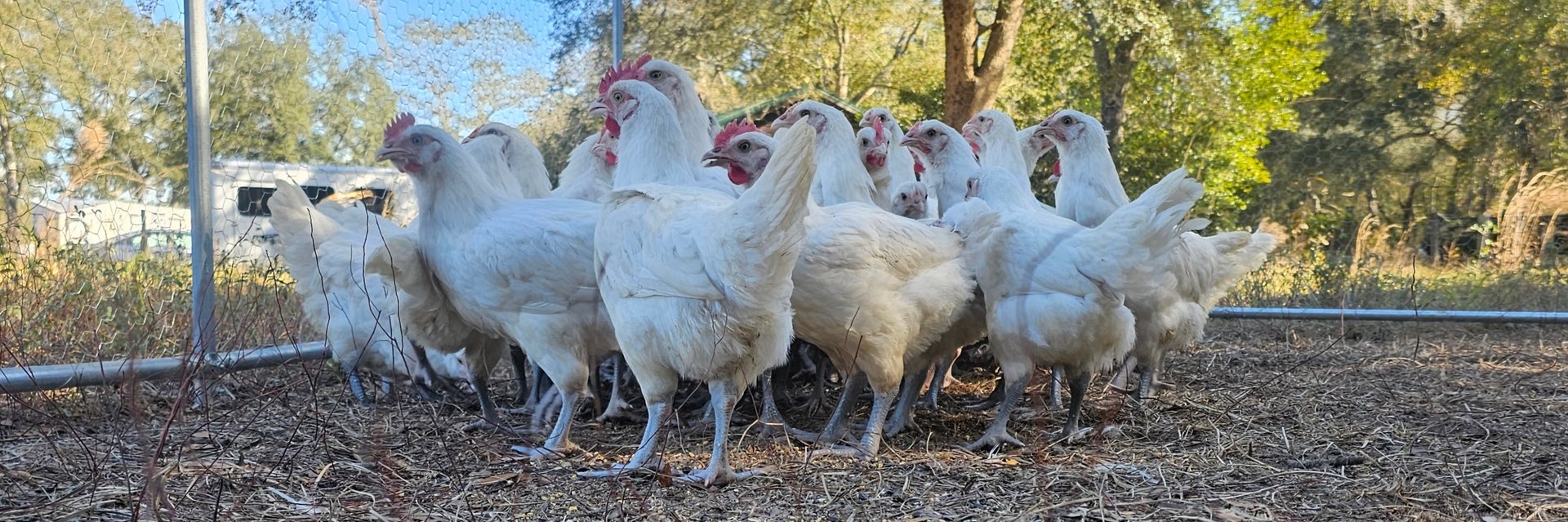
Our first Bresse have grown into some very nice adults. This is one of our two keeper roos. He is a nice wide, thick boy, wide set legs, very heavy, very meaty, and pretty laid back. His feathers are nice and bright white, nice blue legs, but lacking the sought after white earlobes.
Many of our hens do have the white earlobes, so we'll be watching for it in any future keeper roos. We plan to start hatching chicks in March 2027 and offering any extra hatching eggs for sale. We'll be puling this guy and the best 10 hens and putting them in a separate area for 2 weeks before and for the duration of the time we're collecting and hatching eggs.
We are selecting for meat. So the ones being used will be the largest and widest of the group. After that we're selecting for color and temperament.
We will be offereing:
Farm fresh eggs
Hatching eggs
Straight run American Bresse chicks
Whole, farm raised American Bresse chickens, processed and packaged here, cleanly, and labeled for pets.
Dog treats (feet, wing tips)


We've harvested a few early culls and boy what a difference. They're bigger, and meatier compared to the dual purpose we had already, and these were the culls! Well worth the switch.


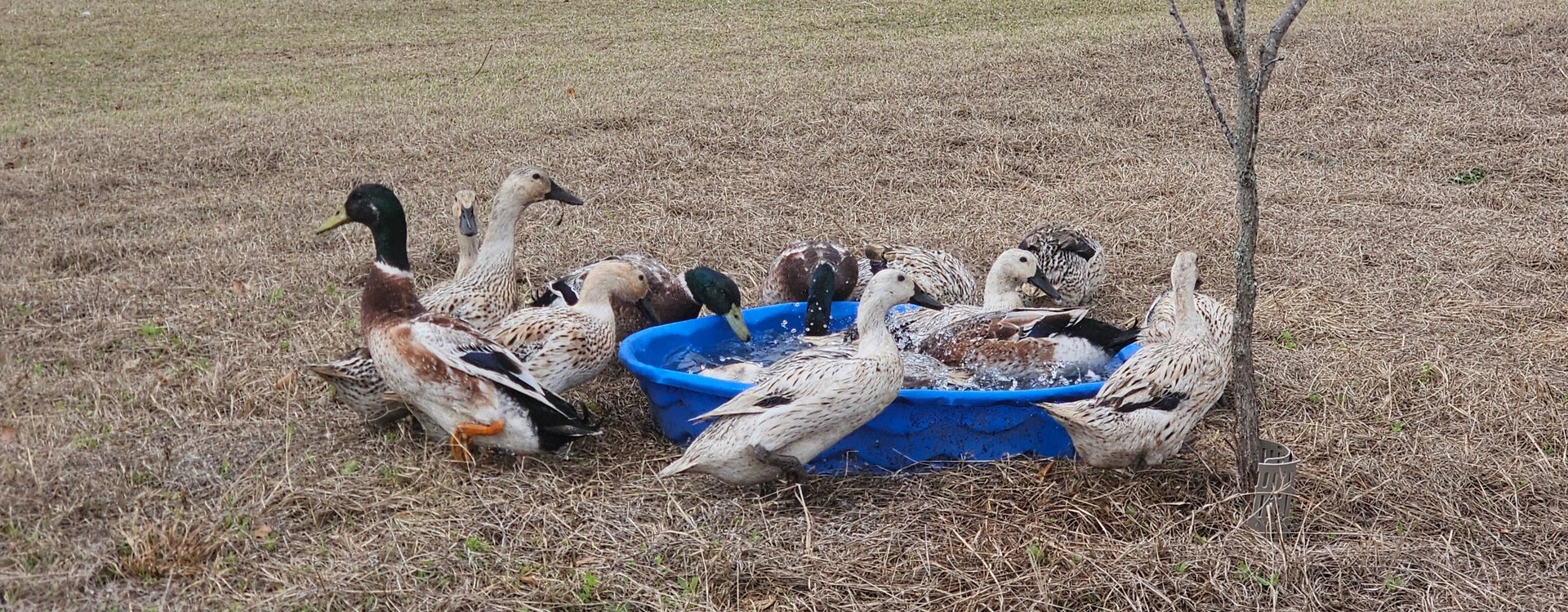
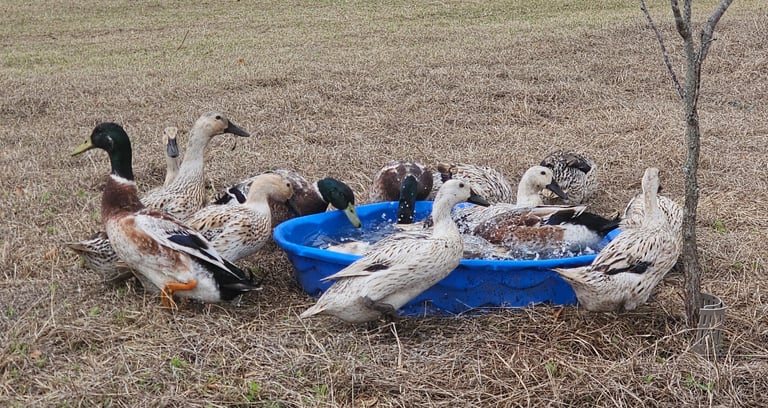
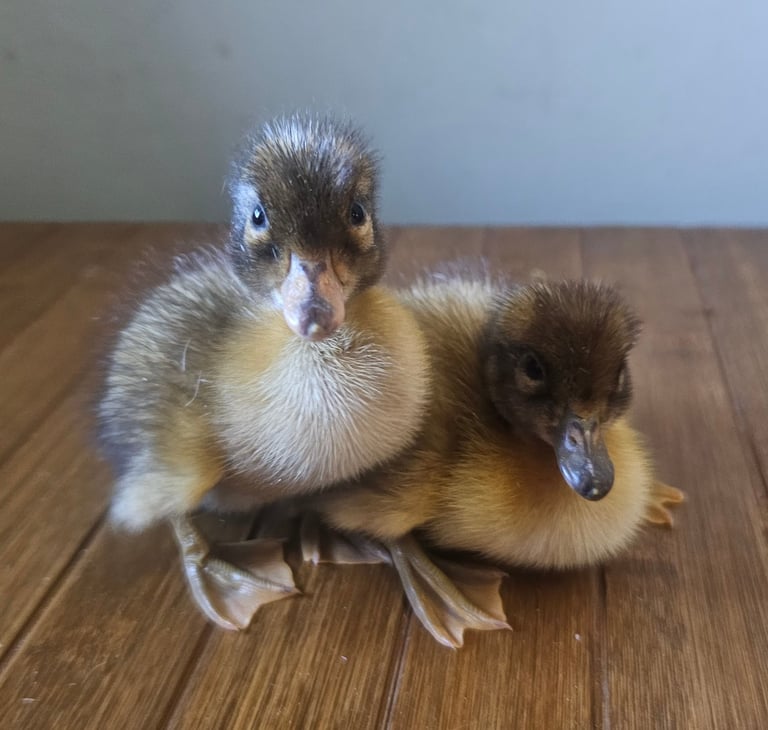
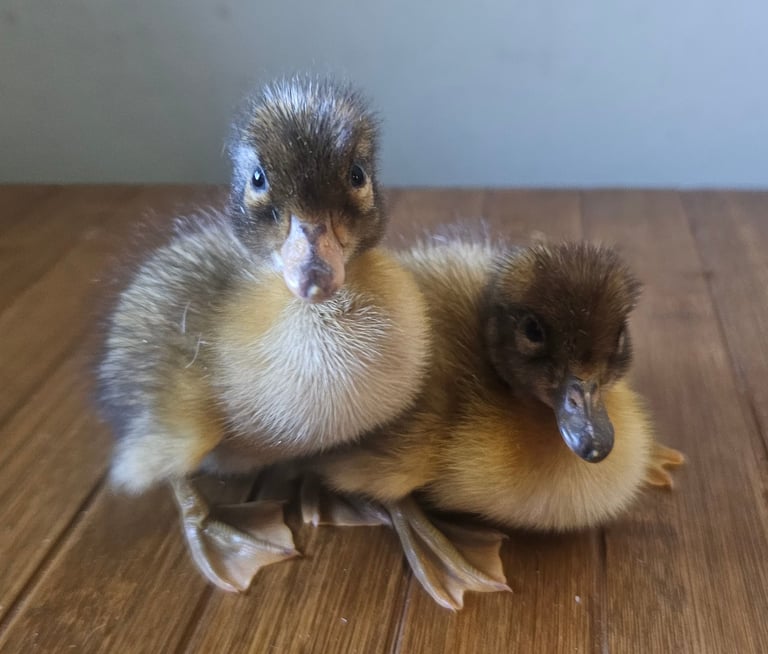
Our Welsh Harlequin ducks have quickly become one of our favorite parts of the farm. They’ve grown into calm, curious birds with a lot of personality, and they’ve proven to be every bit as productive as we hoped. We chose this breed because they’re known for their excellent egg production laying 150-200 a year. They have mild temperaments, and beautiful coloring. The drakes shine with iridescent green heads while the hens are soft shades of cream and white.
They’re also a practical choice for us. Welsh Harlequins are hardy, thrive on forage, and are typically too heavy to fly far, which makes them easy to manage while still allowing them plenty of free range freedom. Their reputation as both a good layer and a quality table bird fits perfectly with our goal of raising multi-purpose animals that truly earn their keep.
Their eggs are incredible. They're rich and full-flavored, with deep golden yolks that make every breakfast or baked good feel a little more special. Even with a smaller flock, these girls are out-laying our chickens right now mid winter.
Ducklings are fairly easy to sex in the first few days, with the boys showing darker bills and the girls lighter two-tone ones. We’ll be offering:
Farm fresh duck eggs
Hatching eggs
Sexed Welsh Harlequin ducklings
Whole, farm raised ducks processed and packaged here, cleanly, and labeled for pets
Dog treats (feet, wing tips)
Ducks
Guinea Fowl
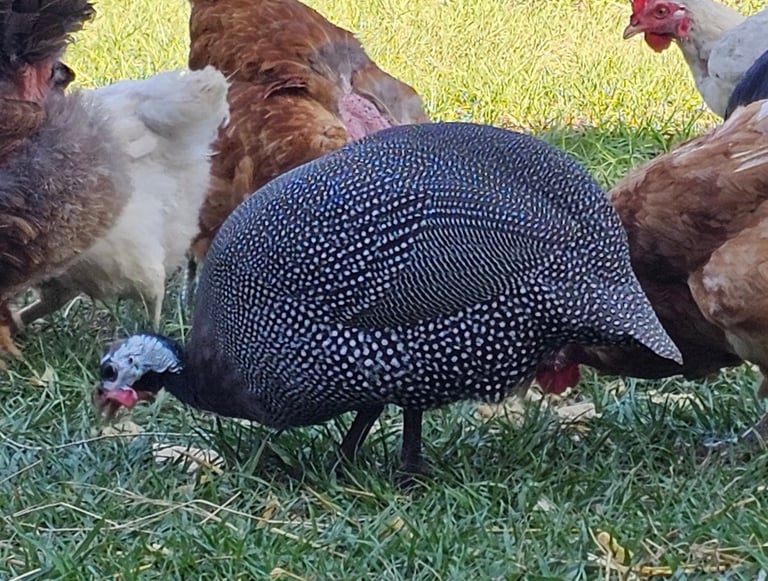
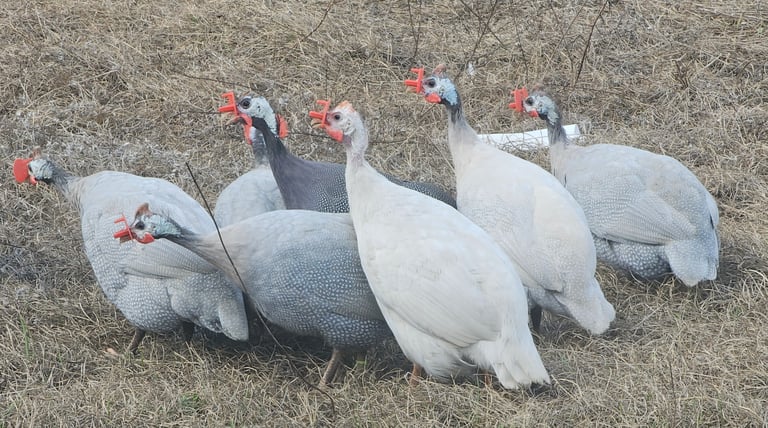
Our guinea fowl flock has come together nicely. They just finished coop training and so far are doing very well bringing themselves in at night. Yes, you can train them to come into the coop in the evening just like the other birds! It just takes more time and patience, but worth it in my opinion.
These birds are mostly here for fun and for their bug-eating talents. Few things patrol a pasture like a group of guineas. They’re quick, alert, and excellent at keeping ticks and other insects under control, and they don't dig holes like chickens do. They’re also some of the most talkative animals on the farm, and once you’ve been around them a while, you start to tell the girls’ two-tone “buck-wheat” call from the boys’ single note.
We have an even total number male to female and everyone seems to be getting along well. We have 1 pearl hen, 1 white hen, 2 lavender hens, and 4 lavender males. We should get all pearl or lavender from this mix if the white one is just white, with all keets at least carrying lavender.
We don’t plan to process guineas for meat sales like our chickens and ducks, but they’ve absolutely earned their place here. They bring color, character, and energy to the farm. And everyone on the farm appreciates the lower amount of bugs. Especially the horses.
I do want to add they can be a little aggressive with newcomers. Blinders work very well to curb this aggression until they forget the new ones are new. We just use the very inexpensive plastic ones that break and fall off if they get hooked on something. Generally they're pretty ok with the other birds, it seems to be mostly bringing in new ones they have an issue with.
info@lokifarmsoutpost.com
Call or Text:(912) 289-5515
© 2026. All rights reserved.
By appointment only
(Flexible, we have a front gate to open)
Proud Members of